

Perimenopause is the transitional stage your body goes through in the years leading up to menopause. It’s a natural part of aging, but because it can bring on a wide and sometimes confusing mix of physical and emotional changes, many women don’t realize what’s happening until symptoms start disrupting daily life. This guide breaks down what perimenopause actually is, how to recognize it, and what you can do to manage it.
What Is Perimenopause?
Perimenopause literally means “around menopause.” It’s the phase during which your ovaries gradually produce less estrogen and progesterone, the two primary hormones that regulate your menstrual cycle. As hormone production becomes less predictable, your periods and overall hormonal balance start to shift.
Perimenopause ends and menopause officially begins once you’ve gone a full 12 consecutive months without a period. Everything before that 12-month mark, even if your periods have become irregular or infrequent, is still considered perimenopause.
When Does Perimenopause Start?
Most women begin noticing perimenopausal changes in their 40s, though it’s entirely normal for symptoms to start in the mid-to-late 30s for some. According to the Cleveland Clinic, the average length of perimenopause is about four years, but it can last up to eight years, though this varies significantly from person to person, with some women moving through it in just a few months, while others experience symptoms for closer to a decade.
There’s no single test that tells you “today, perimenopause begins.” It’s identified through a combination of age, symptoms, and changes in your menstrual cycle, and confirmed over time rather than at a single visit.
What Causes Perimenopause?
Perimenopause is driven by the natural decline in ovarian function as you age. Your ovaries hold a finite number of eggs, and as that reserve diminishes, the ovaries respond by producing estrogen and progesterone less consistently. Instead of a steady decline, hormone levels tend to fluctuate, rising and falling unevenly from cycle to cycle, which is why symptoms can feel unpredictable and vary in intensity from month to month.
In the last one to two years before menopause, the drop in estrogen tends to accelerate, which is often when symptoms become most noticeable.
Common Symptoms of Perimenopause
Every woman’s experience is different, but the most frequently reported symptoms include:
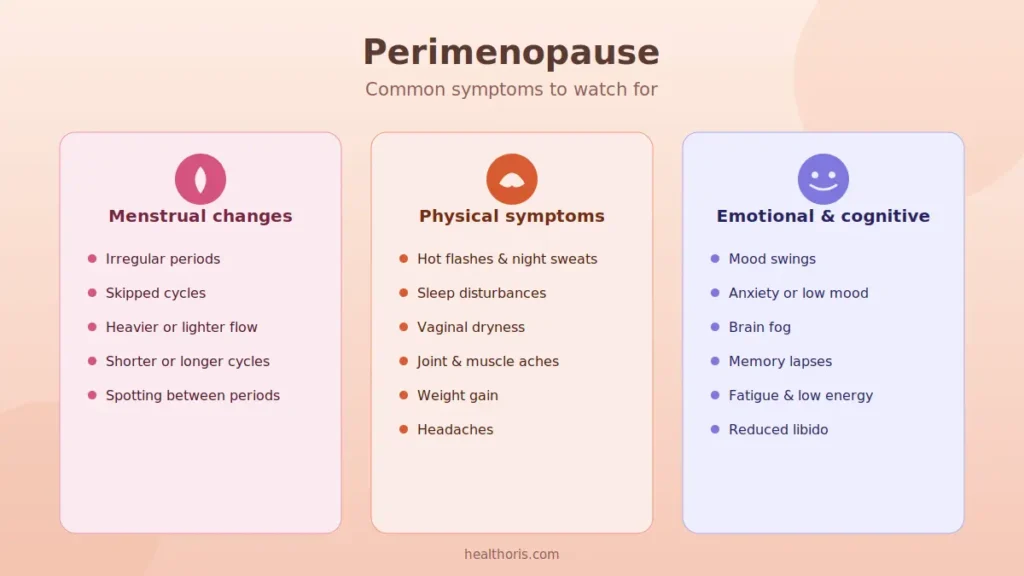
Menstrual changes
- Irregular periods, cycles that come earlier, later, lighter, or heavier than usual
- Skipped periods
- Changes in flow and duration
Physical symptoms
- Hot flashes and night sweats
- Sleep disturbances and insomnia
- Vaginal dryness and discomfort during sex
- Headaches
- Joint and muscle aches
- Changes in skin and hair texture
- Weight gain, particularly around the abdomen
- Breast tenderness
Emotional and cognitive symptoms
- Mood swings and increased irritability
- Anxiety or low mood
- Brain fog and difficulty concentrating
- Memory lapses
- Fatigue and low energy
- Reduced libido
It’s worth noting that psychological symptoms, mood changes, anxiety, memory issues, and fatigue, are reported extremely often during this transition, yet they’re frequently overlooked because perimenopause is still commonly associated mainly with hot flashes. If mood or cognitive changes are affecting your quality of life, they’re just as valid a reason to seek support as physical symptoms.
When Should You See a Doctor?
Irregular periods are expected during perimenopause, but certain patterns are worth getting checked out to rule out other causes:
- Periods that become unusually heavy or include large clots
- Needing to change protection every one to two hours
- Periods lasting noticeably longer than usual
- Spotting or bleeding between periods
- Bleeding after sex
- Periods occurring less than 21 days apart
None of these automatically mean something is wrong, but a healthcare provider can rule out other conditions and confirm that what you’re experiencing fits the expected pattern of perimenopause.
How Is Perimenopause Diagnosed?
There isn’t one definitive test for perimenopause. Instead, a healthcare provider typically considers:
- Your age
- Your symptoms
- Changes in your menstrual cycle
- Your overall medical history
Blood tests to check hormone levels may sometimes be used to support a diagnosis or rule out other conditions, but because hormone levels fluctuate so much during this phase, a single blood test often isn’t conclusive on its own.
Treatment and Management Options
Perimenopause symptoms don’t need to be treated unless they’re bothersome, many women manage the transition with little to no intervention. But if symptoms are affecting your daily life, several options can help:
Hormone replacement therapy (HRT), as outlined by the Mayo Clinic, is often considered the most effective treatment for symptoms driven by hormonal decline, including hot flashes, night sweats, and mood-related symptoms. It’s available in several forms, including pills, patches, gels, and IUDs. HRT isn’t right for everyone, so it’s worth discussing your personal health history with a doctor to see if it’s a good fit.
Non-hormonal medical options For those who can’t or prefer not to use HRT, certain antidepressants and other medications can help manage specific symptoms like hot flashes and mood changes.
Lifestyle approaches
- Regular exercise, which supports mood, sleep, and weight management
- A balanced diet rich in fruits, vegetables, and whole grains
- Adequate calcium intake (1,000–1,200 mg daily) to support bone health as estrogen declines
- Tracking symptoms and potential triggers (like alcohol, caffeine, or stress) in a journal to identify patterns
- Stress-reduction practices such as yoga, meditation, or breathing exercises
Vaginal-specific treatments For vaginal dryness or discomfort, localized treatments like vaginal moisturizers, lubricants, or low-dose vaginal estrogen can offer targeted relief.
Perimenopause vs. Menopause: What’s the Difference?
It’s easy to confuse the two, but the distinction is simple:
- Perimenopause is the transition phase. You’re still having periods, even if they’re irregular, and your hormone levels are fluctuating.
- Menopause is a single point in time, reached once you’ve gone 12 full consecutive months without a period.
Everything after that point is technically called post-menopause, though many symptoms that started in perimenopause can continue for some time afterward.
The Bottom Line
Perimenopause is a normal, natural stage of life, not a medical problem to be fixed, but a transition that can bring real, sometimes disruptive symptoms. Understanding what’s happening in your body makes it much easier to make sense of the changes you’re experiencing, know when they’re within the normal range, and recognize when it’s worth reaching out to a healthcare provider for support. If your symptoms are affecting your quality of life, effective treatments are available, you don’t have to just push through it.
Frequently Asked Questions
What is the first sign of perimenopause?
For most women, the earliest sign is a change in the menstrual cycle, periods that become irregular, arrive earlier or later than expected, or feel noticeably lighter or heavier than before. Hot flashes and sleep disturbances often follow soon after.
At what age does perimenopause start?
Perimenopause typically begins in a woman’s 40s, though it can start in the mid-to-late 30s for some. The average age of menopause itself (12 months without a period) is around 51, and perimenopause is the multi-year phase leading up to that point.
How long does perimenopause last?
On average, perimenopause lasts about four to eight years, though this varies widely. Some women transition in just a few months, while others experience symptoms for closer to a decade before reaching menopause.
Can you get pregnant during perimenopause?
Yes. As long as you’re still having periods, even irregular ones, ovulation can still occur, which means pregnancy is possible. If you don’t want to become pregnant, contraception is still recommended until you’ve officially reached menopause.
How do you know if you’re in perimenopause or menopause?
You’re in perimenopause if you’re still getting periods, even if they’re unpredictable. You’ve reached menopause once you’ve gone a full 12 consecutive months without a period. Menopause is a single point in time; perimenopause is the transition leading up to it.
Does perimenopause cause weight gain?
Weight gain, particularly around the abdomen, is a commonly reported symptom during perimenopause. It’s linked to hormonal shifts, slower metabolism with age, and changes in muscle mass, though diet and activity levels also play a significant role.
What helps with perimenopause symptoms naturally?
Regular exercise, a balanced diet, adequate calcium intake, stress management techniques like yoga or meditation, and tracking symptom triggers (such as caffeine, alcohol, or stress) can all help ease symptoms. For more severe or disruptive symptoms, it’s worth discussing medical treatment options like hormone therapy with a healthcare provider.
This article is for informational purposes only and is not a substitute for professional medical advice. If you’re experiencing symptoms that concern you, please consult a qualified healthcare provider.